Call Us
+86-18072289720
- All
- Product Name
- Product Keyword
- Product Model
- Product Summary
- Product Description
- Multi Field Search

Views: 0 Author: Site Editor Publish Time: 2026-10-30 Origin: Site

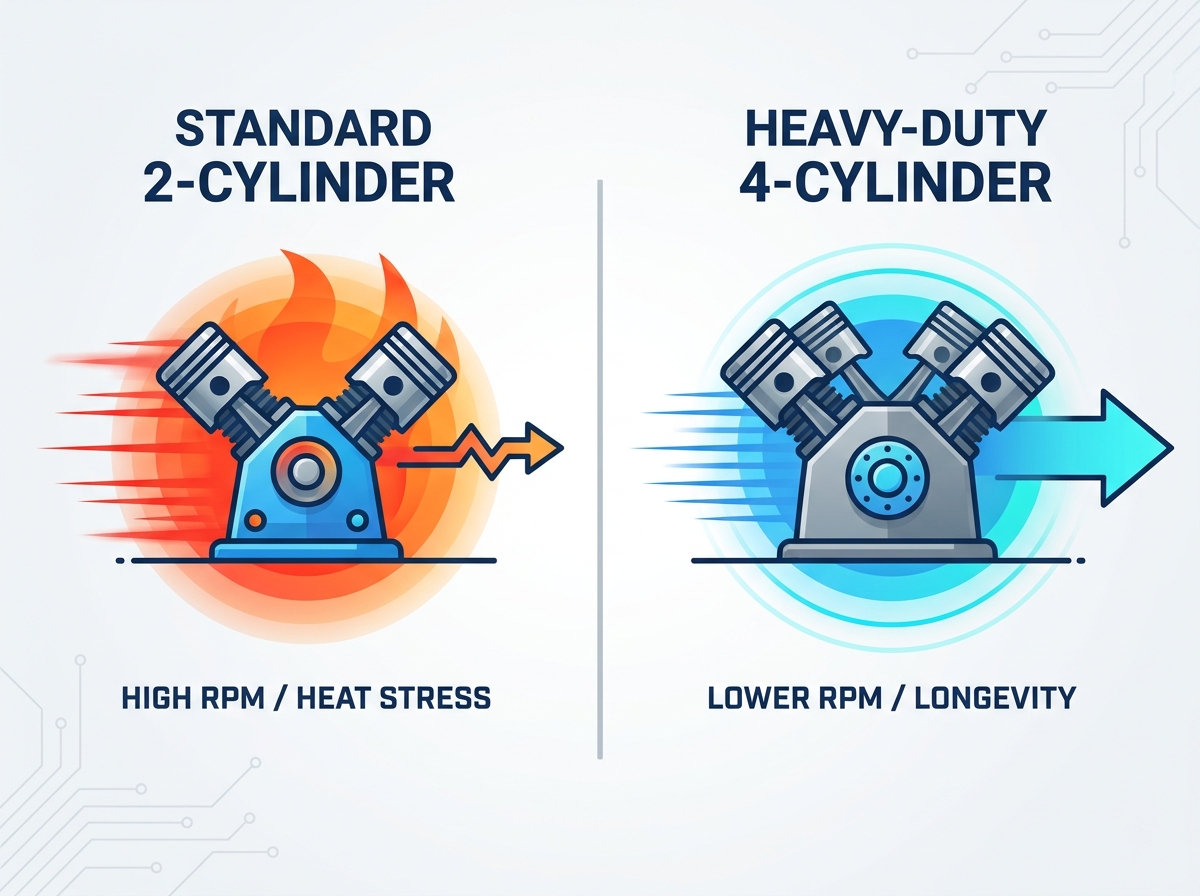
Upgrading your shop's air supply represents a significant capital investment. You typically make this leap when your facility demands a continuous, heavy-duty air supply. Auto body shops, manufacturing plants, and demanding fabrication floors simply cannot afford downtime. Unfortunately, standard 2-cylinder or single-stage compressors often struggle under these harsh conditions. They generate excessive heat, produce deafening noise, and consistently fail to deliver adequate CFM for continuous-run pneumatic tools.
We wrote this guide to strip away confusing marketing jargon. We will help you compare leading configurations so you can confidently identify the best value for your specific operation. Instead of focusing on flashy horsepower stickers, we evaluate real-world CFM delivery and operational longevity. You will learn exactly how to match a heavy-duty machine to your daily operational duty cycles. By the end of this breakdown, you will understand the hidden implementation requirements and know how to select a robust 4 cylinder compressor to protect your profitability.
Standard compressors inevitably face thermal breakdown when you push them beyond their designed duty cycles. High-demand tools easily overwhelm smaller pumps. Sanders, die grinders, and multiple active paint lines require massive volumes of air. When a smaller pump runs constantly to keep up, internal temperatures spike. This excess heat degrades lubricating oil and accelerates piston ring wear. Ultimately, the system shuts down or suffers a catastrophic mechanical failure.
A successful equipment upgrade must solve these exact bottlenecks. The new system must deliver highly stable line pressure across the entire shop floor. It must guarantee faster tank recovery times during peak usage spikes. Furthermore, reducing ambient shop noise significantly improves worker safety and daily communication. Achieving all three goals simultaneously requires upgrading the core pumping architecture.
Here is where the mechanical advantage of a 4 cylinder compressor shines. Engineers often arrange these pumps in a V4 or W4 block configuration. This intelligent layout distributes the intense compression workload across four pistons instead of two. More cylinders provide a substantially larger swept volume per revolution. Because the pump moves more air per stroke, the electric motor can spin the pump pulley much slower. Slower rotation means the unit runs dramatically cooler. Cooler operation inherently minimizes the amount of destructive moisture building up inside the air tank.
You must acknowledge the cost-to-benefit reality before making a purchase. Initial purchase prices for these advanced units often sit 30% to 50% higher than traditional twin-cylinder variants. However, you realize a massive return on investment through increased operational uptime. You will experience a much lower maintenance frequency. Over a decade, the extended asset lifespan easily justifies the higher initial acquisition expense.
Dismiss "peak horsepower" claims immediately when browsing spec sheets. Manufacturers often use inflated peak horsepower numbers for marketing purposes. These numbers do not reflect actual air generation capabilities. Instead, instruct your purchasing team to evaluate standard CFM (Cubic Feet per Minute) delivery at specific operating pressures. Look closely at CFM delivery at 90 PSI for standard pneumatic tools. For high-pressure industrial applications, scrutinize the CFM output at 175 PSI. True tool capacity relies entirely on these two metrics.
The materials utilized in pump construction directly dictate real-world durability. You generally choose between cast iron and aluminum. Cast iron retains heat longer than aluminum, but it proves far more durable against constant mechanical stress. Industry standards overwhelmingly favor solid cast-iron blocks for heavy-duty setups. Cast iron resists warping and maintains tighter cylinder tolerances over thousands of operating hours.
Low RPM design represents another critical evaluation dimension. Pumps operating below 1,000 RPM are vastly superior for noise reduction and long-term component survival. High-speed pumps running at 3,400 RPM literally beat themselves to death through excessive friction. Slower pumps preserve piston rings, protect valve plates, and keep lubricating oil from breaking down prematurely.
Always contrast standard commercial duty cycles against true industrial ratings. Standard commercial models usually feature duty cycles hovering around 75% to 80%. This rating means the machine needs a cooling rest period for 20% of every operating hour. True industrial continuous duty cycles allow you to run the machine 100% of the time without fearing thermal shutdown. If your shop runs tools continuously all day, buying an 80% duty cycle machine will result in severe bottlenecks.
A multi-cylinder layout inherently reduces violent vibration. You will notice a significantly lower decibel output compared to a high-RPM twin-cylinder model. The mechanical stroke of a slower pump produces a lower frequency hum rather than a high-pitched mechanical scream. This quiet operation becomes a critical deciding factor if you must place the unit indoors near active workstations.
Comparison of Common 4 Cylinder Compressor Profiles
| Profile Category | Target Environment | Typical HP Range | Primary Value Proposition |
|---|---|---|---|
| Premium Tier | High-Demand Auto & Industrial Shops | 10HP - 15HP | Maximum uptime and bulletproof pump longevity over decades. |
| Mid-Tier | Budget-Conscious Fabrication | 5HP - 7.5HP | Excellent balance of cooling benefits for moderate daily use. |
| Specialized Niche | High-Pressure / Clean Air Standards | Varies heavily | Meets specific extreme PSI targets or strict contamination limits. |
These premium machines focus heavily on maximum uptime and relentless 100% duty cycles. Manufacturers engineer them specifically for environments running multiple high-draw tools simultaneously. You will typically find advanced intercooling and aftercooling features integrated directly into the block. These features drastically drop air temperatures before the air ever reaches the receiver tank.
The profile for this category usually encompasses massive 10HP to 15HP models. They rely on two-stage compression and almost always include factory-wired magnetic starters to protect the motor. You face a high upfront cost to acquire this tier. However, you secure exceptional long-term savings over a 10-year period due to the absolutely bulletproof pump design. A premium 4 cylinder compressor in this category will often outlast the technicians operating it.
Mid-tier models focus intensely on balancing initial purchase costs with adequate performance. They serve shops requiring strong air volume for moderate daily use. We generally see 5HP to 7.5HP single or two-stage configurations dominating this category. They lack some of the heavy-duty cooling fins found on premium tiers but still utilize robust cast-iron components.
This category presents an excellent value proposition for small-to-medium shops. You gain the thermal cooling benefits of a multi-cylinder block without overspending on industrial capacities you will never use. If your crew uses pneumatic tools heavily but does not run them continuously for 8 hours straight, a mid-tier unit makes perfect financial sense.
Certain industrial requirements force buyers to look at highly specialized setups. You might face stringent clean air standards for pharmaceutical packaging or extreme high-pressure demands for CNC pneumatic feeds. Specialized PCP setups for testing equipment also fall into this category. These models focus primarily on multi-stage compression designed to hit specific PSI targets rather than pushing raw CFM volume. The value proposition here relies entirely on precise application matching rather than general shop utility.
Evaluating raw machine prices paints an incomplete picture. You must carefully calculate hidden implementation expenses to understand true value. Many shop owners purchase massive machines only to discover their facility cannot physically support them.
We strongly warn buyers about shop power limitations. Many robust models require true 3-phase power. If you only have single-phase power, you must install a dedicated 50+ amp circuit just to handle the startup surge. Upgrading shop electrical panels can easily add thousands of dollars to your project. This massive hidden expense drastically alters the actual value proposition of a larger unit. Always consult a certified electrician before finalizing an equipment order.
A high-capacity pump pushes significantly more air than standard units. Moving more air inevitably generates more condensation. You must implement suitably scaled air treatment systems. Necessary upgrades often include:
Detail your physical footprint requirements early. A massive cast-iron pump requires substantial floor space. You must address the absolute necessity of heavy-duty vibration pads. Without them, the machine will slowly destroy the concrete floor beneath it. You must also install flexible line connections between the tank and your hard-piped shop lines to absorb mechanical shaking. Finally, ensure proper physical clearance around the entire unit. The flywheel relies on ambient air circulation for cooling. Placing the machine tightly in a dusty corner will choke the cooling fins and cause premature overheating.
Selecting the ideal machine requires a disciplined, step-by-step approach. Avoid buying strictly based on brand loyalty. Instead, follow a logical audit of your actual facility requirements.
Next-Step Action: We strongly recommend engaging directly with industrial supply distributors before purchasing. Ask them to verify specific warranty terms. Check local service availability in your immediate zip code. Confirm shipping logistics, as unloading a 600-pound machine requires specialized forklift equipment.
The best value in a heavy-duty air setup is rarely the cheapest model available. True value emerges from choosing the exact machine that aligns flawlessly with your shop's duty cycle needs and available infrastructure. You must accurately audit your simultaneous tool usage and respect your building's electrical constraints.
Reiterate the core facts before signing a purchase order. Investing in lower RPM architectures, cast-iron durability, and adequate CFM overhead remains the surest way to eliminate operational bottlenecks. A properly sized 4 cylinder compressor protects your profitability by ensuring your crew never stops working while waiting for an air tank to refill.
A: Yes, particularly for heavy industrial applications. The multi-cylinder architecture distributes the compression workload. This design drastically reduces internal heat generation. It allows the pump to spin at much lower RPMs while delivering identical air volume. Ultimately, you gain a significantly longer lifespan and far greater reliability for continuous daily use.
A: Not necessarily. Electrical consumption relates directly to motor horsepower and overall pump efficiency, rather than just the cylinder count. A highly efficient multi-cylinder pump running at lower speeds often compresses air faster. Because it fills the tank and shuts off quicker, it can sometimes consume less total electricity over a full shift.
A: Standard industrial maintenance intervals suggest changing the oil every 500 to 1,000 operating hours. However, you must perform the initial break-in oil change much sooner, typically after the first 50 hours of use. This crucial first change removes tiny metal shavings generated during factory seating. Always consult your specific manufacturer manual.
A: Yes, the slower mechanical stroke produces a lower frequency sound. This deep hum sounds much less harsh than the high-pitched whine of a rapidly spinning twin-cylinder pump. However, total decibel output still depends heavily on the motor type, enclosure panels, and the quality of the installed intake silencers.